

Organizations talk about empowerment, collaboration, and innovation. They say they want teams to take initiative, solve customer problems, and deliver meaningful outcomes.
But there is often a big gap between what we say and what we do.
Teams are completing tasks but not feeling much purpose or impact. Decisions get escalated (and delayed) that shouldn’t need approval. “Collaboration” feels like coordinating handoffs rather than creating product value together. People hesitate to speak up or take action because it feels safer to wait for direction.
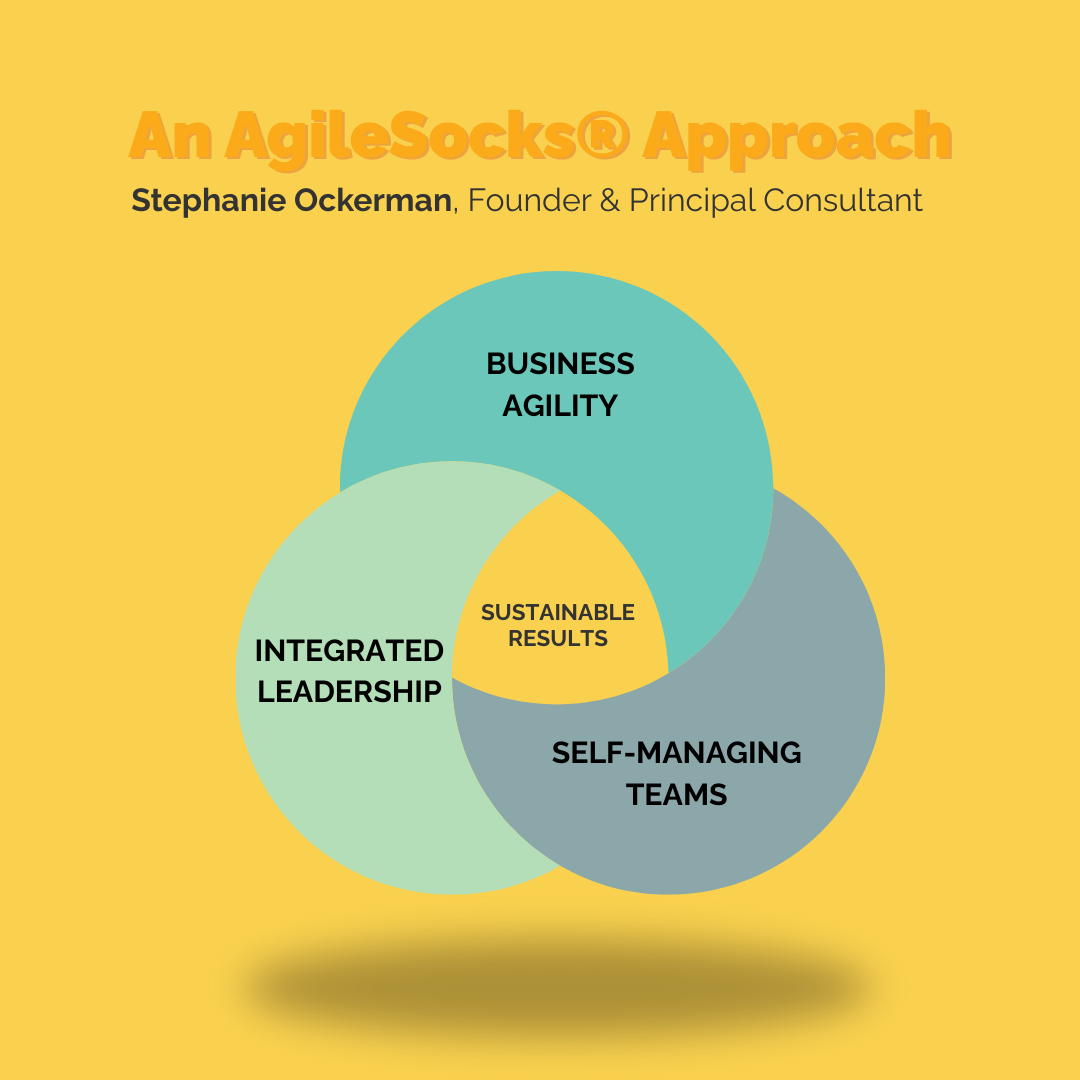
Leaders feel the tension. Teams feel the pressure. And despite everyone’s effort and good intentions, progress is slower than it should be. In the first article of this series, I wrote about the three competencies adaptive organizations must grow to create clarity and alignment: Business Agility, Self-Managing Teams, and Integrated Leadership.
This article focuses on the Self-Managing Teams competency. Because without the ability to work together with trust, transparency, and ownership, even the best strategies will fail.
Self-managing teams are how strategy comes to life. They’re also how organizations know when strategy needs to shift.
But most teams aren’t set up for effective self-management and co-creation. They’re set up to comply.
The root cause isn’t that people are not working hard enough or are not smart enough.
It’s that we don’t set teams up for success. They are not supported in growing a strong team, continuously improving their ways of working, and solving problems collaboratively.
Self-managing teams aren’t teams without leaders or structure. They are teams that are supported by leaders and structure to do the following:
Here are the three building blocks that make this possible:
Team identity is the foundation of everything — trust, shared purpose, and mutual accountability.
Teams with a strong identity:
A strong team identity gives people something to belong to and something to steward. Without it, work relationships become transactional, and learning and improvement are stifled.
Self-managing teams don’t wait for someone else to fix problems or decide how work should happen. They take responsibility for both the outcomes they create and their ways of working.
This looks like:
The people who do the work are the ones who best know how to do it. When teams are empowered and incentivized to work together, they will find better ways to improve value delivery and reduce forms of waste.
Innovation is possible when teams can openly explore problems, share diverse perspectives, and experiment their way towards enabling customer outcomes.
Collaborative problem-solving means:
This capability allows teams to discover innovative solutions and adapt quickly to new information. And this also helps the organization learn when strategy might need to change.
I often hear leaders in organizations say they want their teams to feel empowered. However, just saying it isn’t usually enough because of three common patterns that undermine self-managing teams.
Escalation Culture
When there are many competing priorities, pressure from stakeholders to “do it all”, and teams don’t feel safe making decisions, a culture of escalation develops. Even if a team does make a decision about what to focus on this week, stakeholders can go around them and try to get it reversed.
Eventually, teams are trained to wait for direction, to just follow orders. Instead of innovation, you get “just tell me what to do.”
Silos and Handoffs
Work has to move from person to person or team to team in order to deliver a valuable outcome. Often, this can take weeks or even months from the time work is started to when customers actually get value. In this system, there is no real transparency to progress nor accountability for outcomes.
Working in silos means people become task-oriented rather than outcome-oriented. The result is lots of waste, stalled progress, and playing the blame-game when it leads to poor results.
Lack of Psychological Safety
When people don’t feel safe to raise issues, question assumptions, or take any risks, self-management is impossible. Teams avoid experimentation because they fear consequences more than they value learning.
Without psychological safety, no framework or practice will make a team self-managing.
Growing this competency isn’t just about giving teams more freedom and ownership. It’s about giving them clarity, structure, and support, so they can step into ownership confidently.
Practices That Help
Facilitation and Coaching That Support Growth
Leadership Behaviors That Enable Self-Management
Leaders play a crucial role. They shift from directing to enabling, from being the expert to facilitating collective intelligence.
This looks like:
Frameworks and tools can provide structure and clarity, but they are only as effective as the people using them. Training, facilitation, and coaching are necessary to help people, teams, and organizations break out of ingrained habits and patterns to build the capacity for self-management. And creating a culture of learning and adaptive leadership is what sustains it.
Most teams want to take initiative. They want to collaborate well, make good decisions, and feel like their work matters. Leaders also want this for their teams. But desire alone isn’t enough.
Teams become self-managing when they are supported in growing a strong team identity, improving how they work together, and solving problems collaboratively. These are not “nice to have” behaviors — they are the conditions that allow strategy to come to life.
Self-management isn’t about pushing decisions down. It’s about creating clarity, trust, and shared purpose so teams can take ownership with confidence.
When organizations invest in these capabilities, the shift is tangible. Collaboration becomes easier. Decision-making becomes clearer. Resilience grows. Teams feel trusted and responsible, and they act like it.
This is how you shift from compliance to collaboration. And it’s how organizations unlock innovation, create alignment, and grow a culture of continuous improvement
If you want to explore how to grow self-managing teams in your organization, reach out for a conversation. Let’s talk about how to empower and enable your teams.



AGILE SOCKS is a registered trademark of Agile Socks LLC. Other marks used herein are the property of their respective owners. For more information see Trademark Notice in Terms & Conditions.